
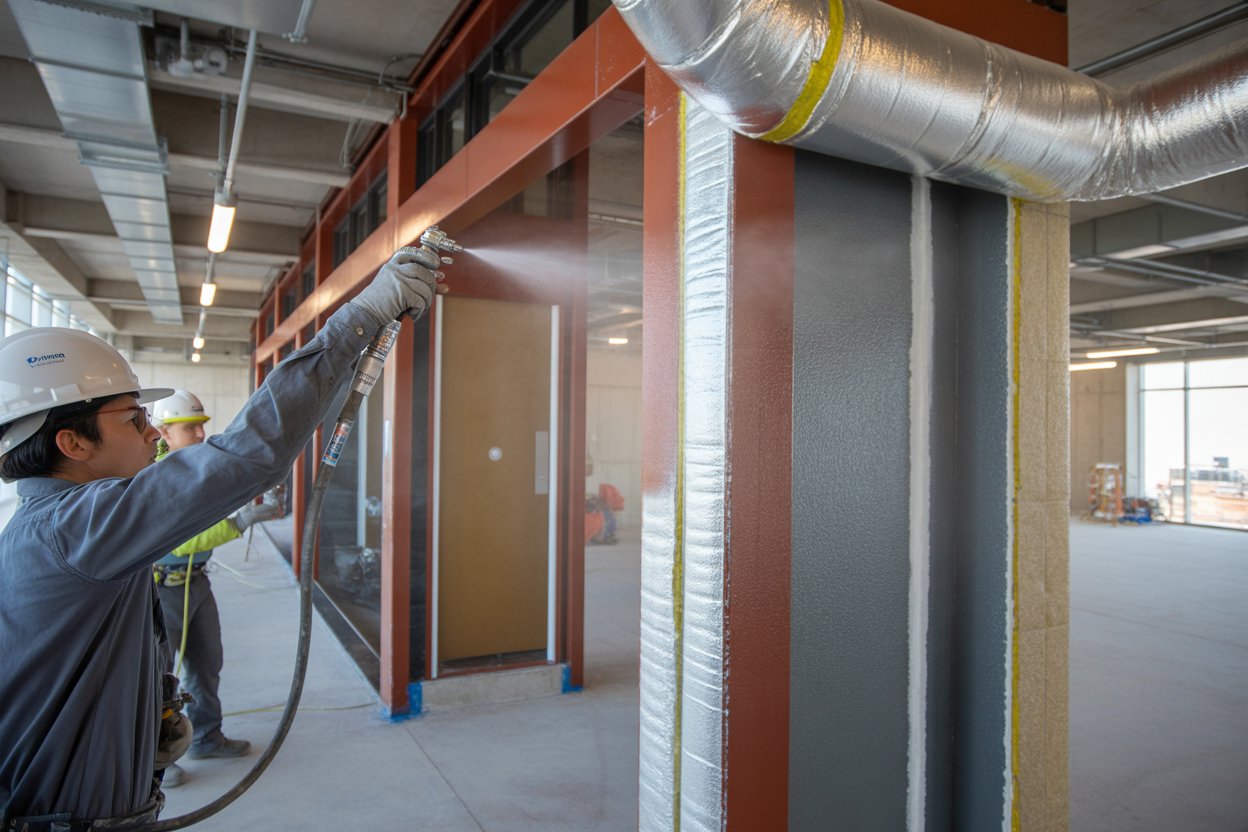
Objective
Our aim is to explain why commercial buildings need passive fire protection surveys, what these inspections cover, how they support fire safety compliance, and what you should do when defects are found.
Key Takeaways
- Passive fire protection helps limit the spread of fire and smoke through a building.
- Surveys can identify defects in fire doors, firestopping, cavity barriers and penetration seals.
- A passive fire protection survey is different from a fire risk assessment.
- Building work and refurbishment can damage existing fire protection.
- Survey findings can help you plan sensible commercial property maintenance and remedial work.
Introduction
A fire alarm can warn people when a fire starts, but it cannot repair a damaged fire door or seal a gap around a cable. That is where Passive Fire Protection Surveys matter. They help you check whether the physical fire protection built into your commercial property is still in suitable condition.
If you own, manage or maintain a commercial building, here’s the thing: fire safety is not only about alarms and extinguishers. Your fire doors, fire barriers, compartment walls, cavity barriers and firestopping all have an important role in limiting the spread of fire and smoke.
Table of Contents
- What Is a Passive Fire Protection Survey?
- Why Do Commercial Buildings Need These Surveys?
- What Does a Survey Check?
- Passive Fire Protection and Fire Safety Compliance
- When Should You Arrange a Survey?
- What Happens After the Survey?
- FAQs
What Is a Passive Fire Protection Survey?
A passive fire protection survey is a specialist inspection of the fire-resistant elements built into a building. These measures are designed to help contain fire and smoke and support safer evacuation.
CA Fire Protection states that its surveys assess components including fire doors, penetration seals, cavity barriers and firestopping systems. The inspection looks at whether these components have been installed and maintained correctly and remain suitable for their intended function.
This is different from a fire risk assessment. GOV.UK explains that a fire risk assessment looks at the wider fire risks within premises, while a passive fire protection survey focuses on specific physical fire protection systems.
Why Do Commercial Buildings Need Passive Fire Protection Surveys?
The simple answer is that passive protection can be damaged, altered or poorly maintained without being obvious during everyday building use.
For example, imagine an office has new electrical cables installed between floors. If those cables pass through a fire-rated wall and the opening is not properly sealed, the original compartmentation may be compromised.
The same issue can occur after plumbing, ventilation or refurbishment work.
A survey can help identify:
- Missing or damaged fire barriers
- Gaps around pipes, cables and ducts
- Defective firestopping
- Damaged or poorly maintained fire doors
- Problems with cavity barriers
- Other visible breaches in fire-resistant construction
What this really means is that a building may look well maintained while important fire protection defects remain hidden above ceilings, inside service areas or around building alterations.
What Does a Survey Check?
| Area checked | What we need to look for |
| Fire doors | Condition, frames, seals, closing mechanisms and required signs |
| Fire barriers | Compartment walls, floors and other fire-resistant barriers |
| Penetration seals | Protection around pipes, cables and ducts |
| Firestopping | Mortar, boards, wraps, collars and other sealing systems |
| Cavity barriers | Protection within roof spaces, floor voids and external wall systems |
These areas are identified within CA Fire Protection’s commercial survey information.
How Does This Support Fire Safety Compliance?
For non-domestic premises in England, the Responsible Person must carry out and regularly review a fire risk assessment and maintain appropriate fire safety measures. GOV.UK states that this responsibility can apply to employers, owners, landlords, occupiers and people such as facilities or building managers who have control of the premises.
The Regulatory Reform (Fire Safety) Order 2005 also sets duties covering fire risk assessment and maintenance of fire precautions.
A passive fire protection survey does not replace the wider fire risk assessment. Instead, it gives you more detailed information about the physical fire protection within your building.
When Should You Consider a Survey?
You should consider a survey when:
- Refurbishment has taken place and walls, ceilings or service routes have been altered.
- New cables, pipes or ducts have been installed through fire-rated construction.
- Fire protection records are incomplete, or the condition of existing systems is unclear.
- You are taking over a commercial property and need a clearer understanding of its passive protection.
- Maintenance work identifies defects that need specialist assessment.
Regular review is important because GOV.UK advises Responsible Persons to review fire safety arrangements and take action where new or increased risks arise.
What Happens After the Survey?
A useful survey should give you clear information about what was inspected, where defects were found and what action may be needed.
You can then:
- Prioritise serious defects.
- Arrange suitable remedial work.
- Keep inspection and maintenance records.
- Review protection after major building work.
- Update your wider fire safety information where required.
CA Fire Protection provides passive fire protection surveys alongside remedial services, allowing identified issues to be addressed by a specialist contractor.
Keep Your Building’s Fire Protection in Check
Your passive fire protection is part of the building itself, so it should not be treated as something you only think about after a fire safety problem appears.
If you manage a commercial property and are unsure about the condition of its fire doors, fire barriers, firestopping or compartmentation, a professional survey can give you a clearer technical assessment.
CA Fire Protection can assess passive fire protection systems and help you identify areas that may require remedial attention.
Frequently Asked Questions
. What is a passive fire protection survey?
It is a specialist inspection of physical fire protection such as fire doors, firestopping, cavity barriers and penetration seals.
Is a passive fire protection survey the same as a fire risk assessment?
No. A fire risk assessment covers wider fire risks, while a passive fire protection survey focuses on the building's physical fire-resistant elements.
What does a passive fire protection survey check?
It can check fire doors, fire barriers, cavity barriers, firestopping and seals around pipes, cables and ducts.
When should a commercial building have a survey?
It is particularly useful when refurbishment, service installations or other building work may have affected passive fire protection.
Who is responsible for fire safety in a commercial building?
Depending on the premises and circumstances, the Responsible Person may be an employer, owner, landlord, occupier, facilities manager or another person with control of the premises.